Fourth track for Noisevember! I learned several things about working with FFTs today, but I didn't use them on this track...This track started with another field recording of crows I made, and then I manipulated it using so techniques I've made use of in the past, just to get warmed up, as it were. It's noisy but nice!
Category: Uncategorized
Topics that don't need a category, or don't fit into any other existing category.
Noisevember tracks 2 and 3
Tracks 2 and 3 for Noisevember.
Track 2 is a short piece made using a recursive composition method that I've been playing with for a while. It's hard to control, so I keep trying. Made with Csound with a score I generated with some code I wrote in Python.
https://soundcloud.com/matthew-m-conroy/recursive-composition-a
Track 3 is a manipulation of a field recording of crows I made a while back. The manipulation is a bunch of different simple shifts of the spectrum using FFTs. I'm really trying to understand how to use FFTs better!
https://soundcloud.com/matthew-m-conroy/crows-shifted
Petrified (Noisevember 1)
My first track for Noisevember 2026. This month, I intend to experiment with reverb and vocoder-like things. This track uses a convolution reverb with an impulse I made with some Python code, and FFT-based vocoder-type manipulations done in Python. The audio source is one of my favorite films, The Petrified Forest, with Bette Davis and Lesley Howard.
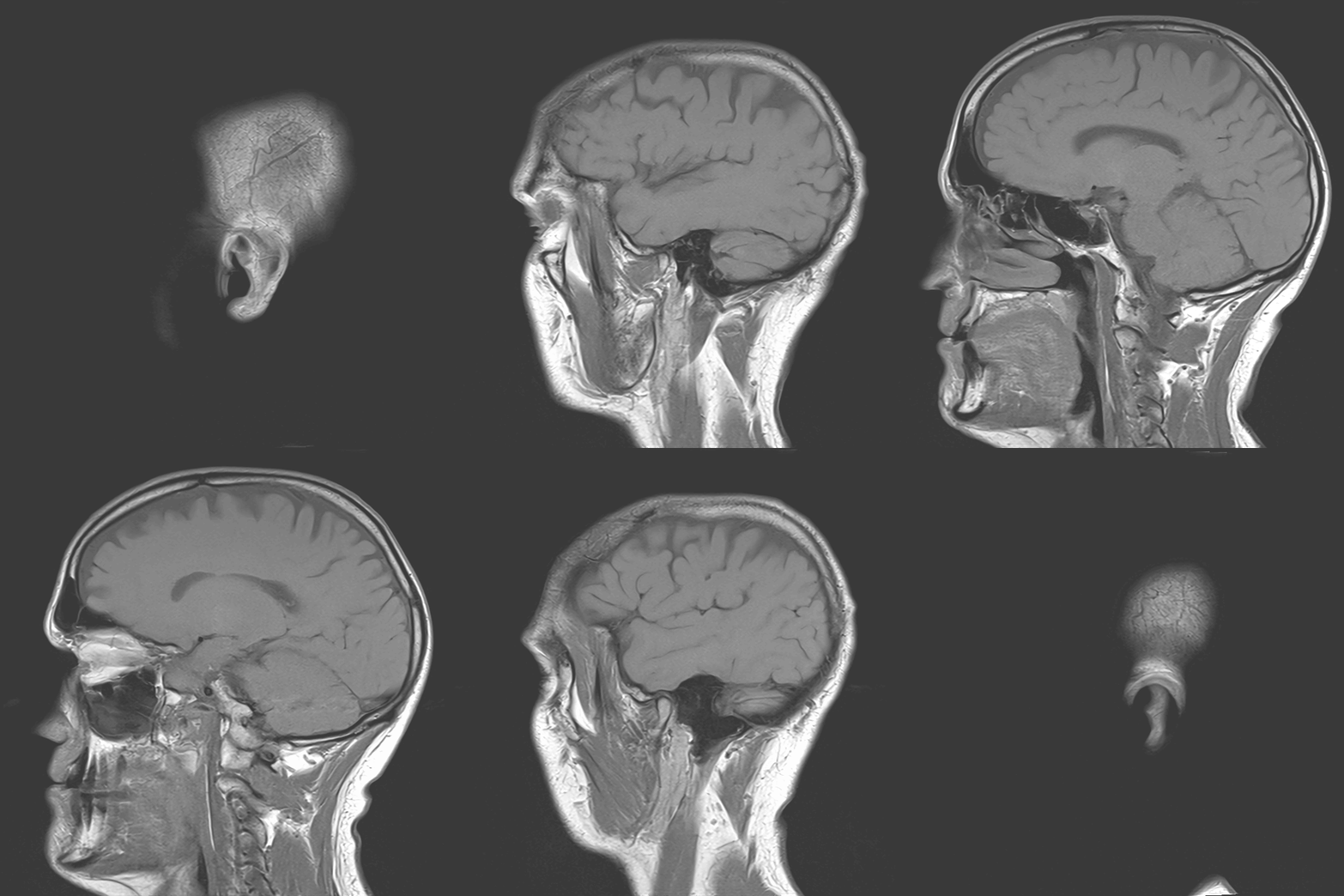
MRI of my head
I had an MRI on Monday evening. Trying to figure out some symptoms I'm having that might be brain-related, but nothing overly concerning yet. I still don't have a report on the MRI yet, but I picked up a CD of images from the MRI today and made this animation. I had to batch convert the images from DICOM format to something I could use, so I wrote a tiny bash script to do that (using dcmj2pnm) and another one to adjust brightness and contrast. Worked great!
I like this animation. Past animations I've made of my head were the top-down kind. This one is way cooler since it looks more like me. So many parts to my head!
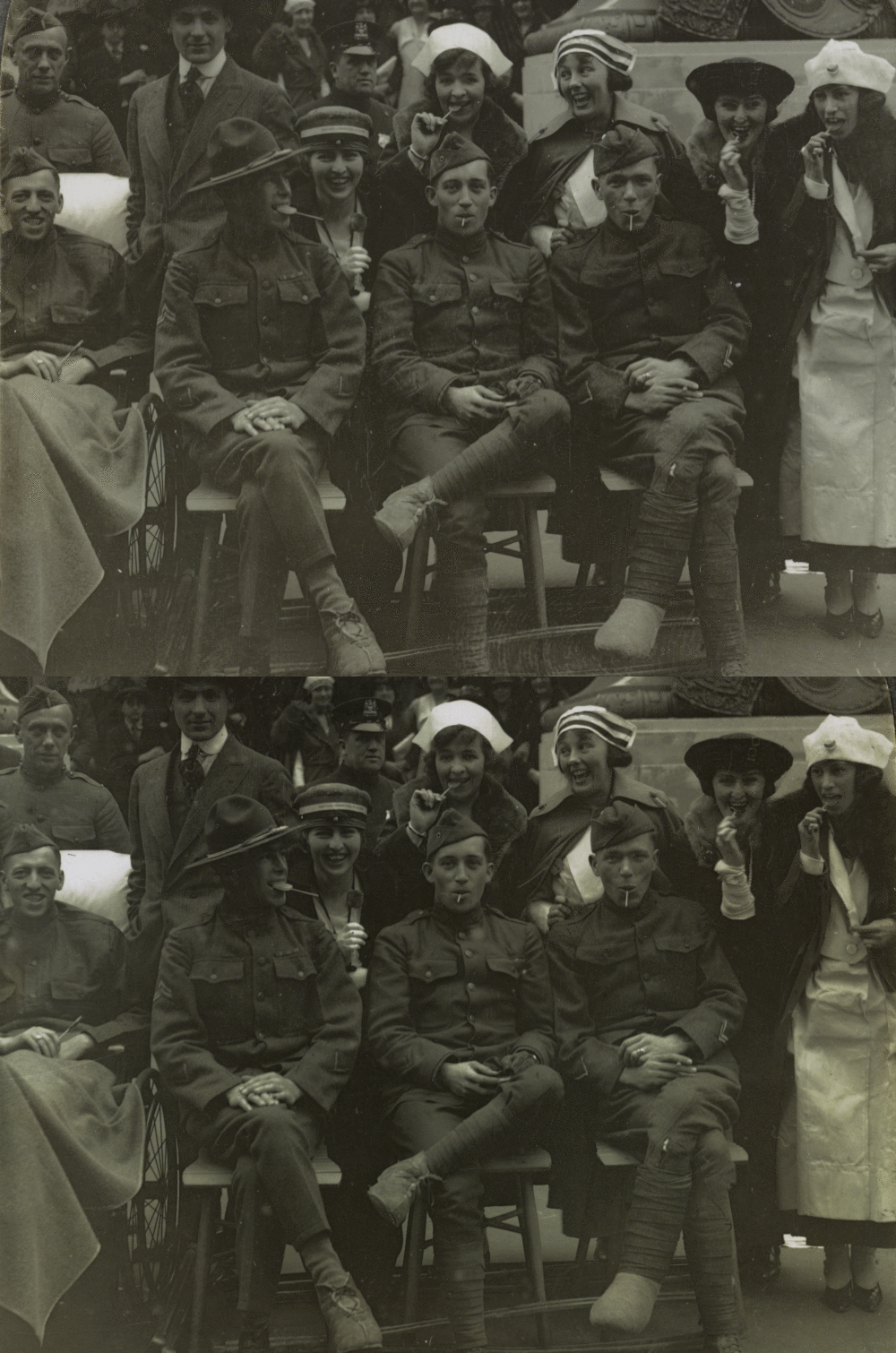
stereograph
nail and lichen
Bit of a wooden fence.

beach scene stereograph animation

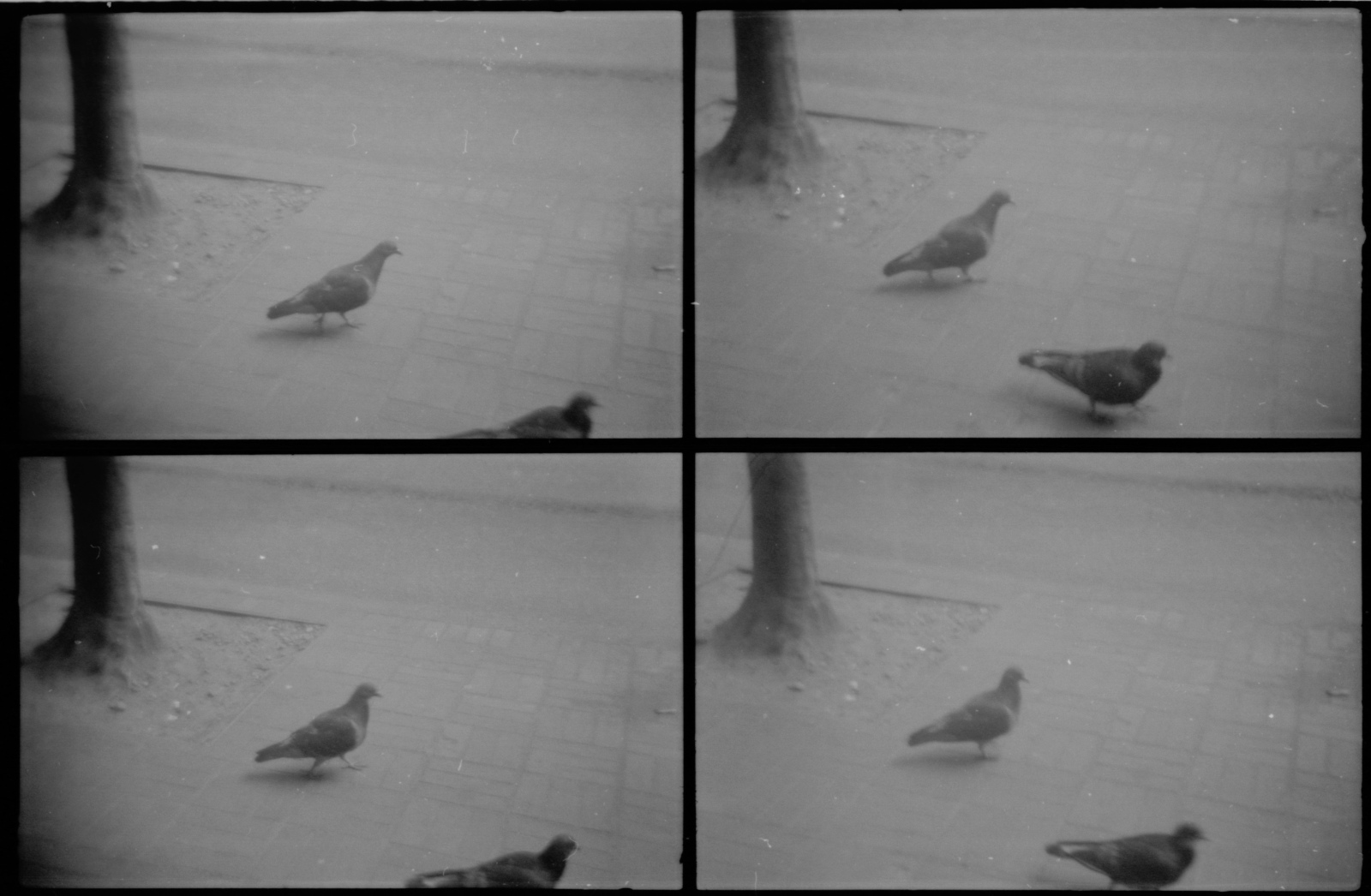
pigeons
Pigeons, shot with a cheapo "quad cam", 2003.
Movielens and R
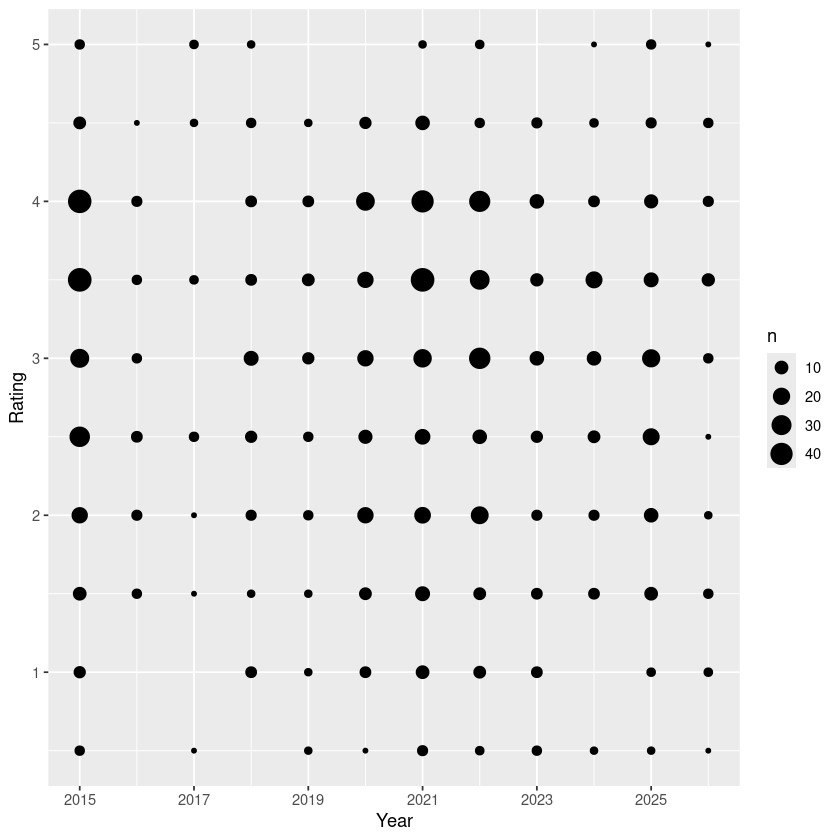
I keep track of my movie watching on MovieLens, a free service of the University of Minnesota. I've rated about 1000 movies. The site lets you look at your own rating data a few ways, but it also lets you download all* of it. So, I downloaded by data and wrote some R bits to make the following plots.
'*' Not actually all of it. There are two relevant files you can download. One has your ratings and the date when you made that rating, but it only goes back to 2015. Another has all of the movies you've rated, and your rating, but it does not include the date when you rated the movie.
The first plot shows the number of each rating (0.5,1,1.5,...,5) versus the year I rated the movie. 2026 isn't over yet, of course.
This one shows the same data, but proportionally: the percent of each rating in each year. This is the one I was initially interested in, to see if I'm getting more or less "harsh". Ultimately, not that interesting.
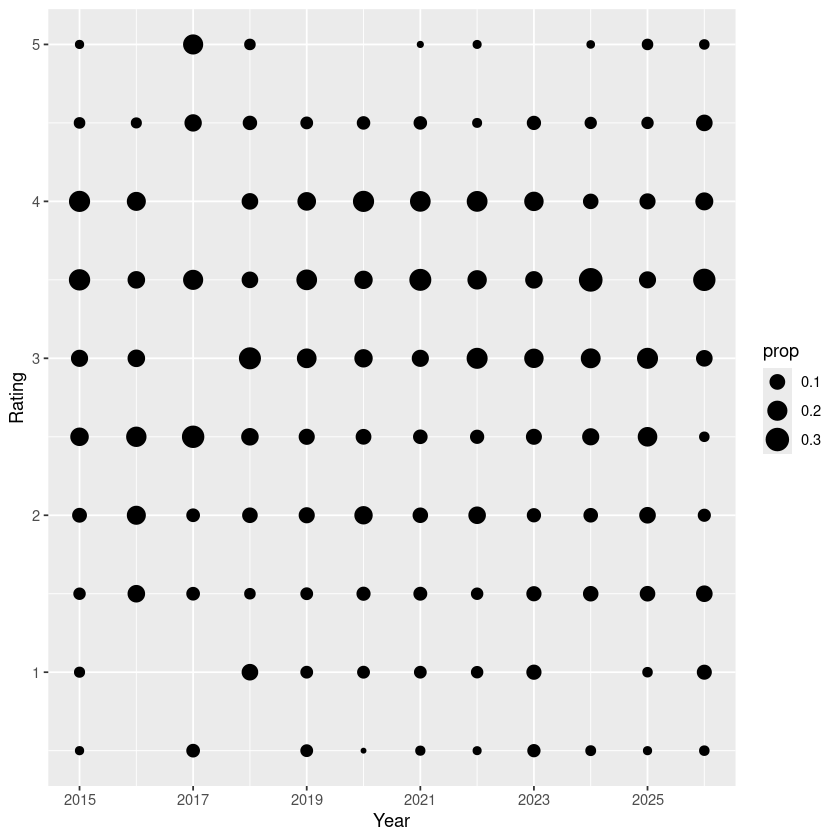
This one shows the year of release versus the year of rating.
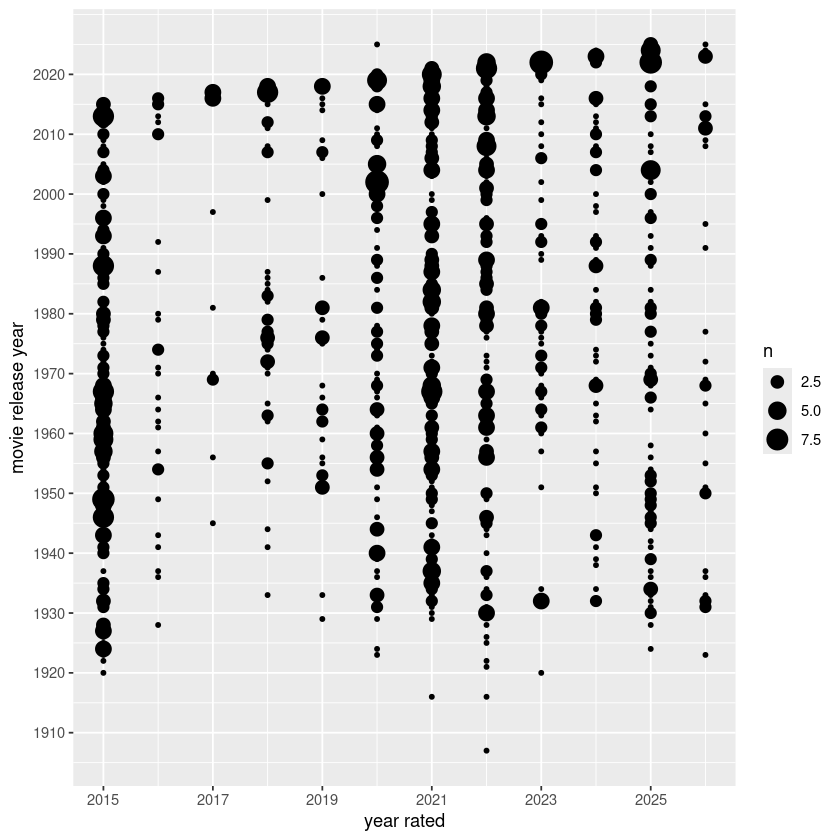
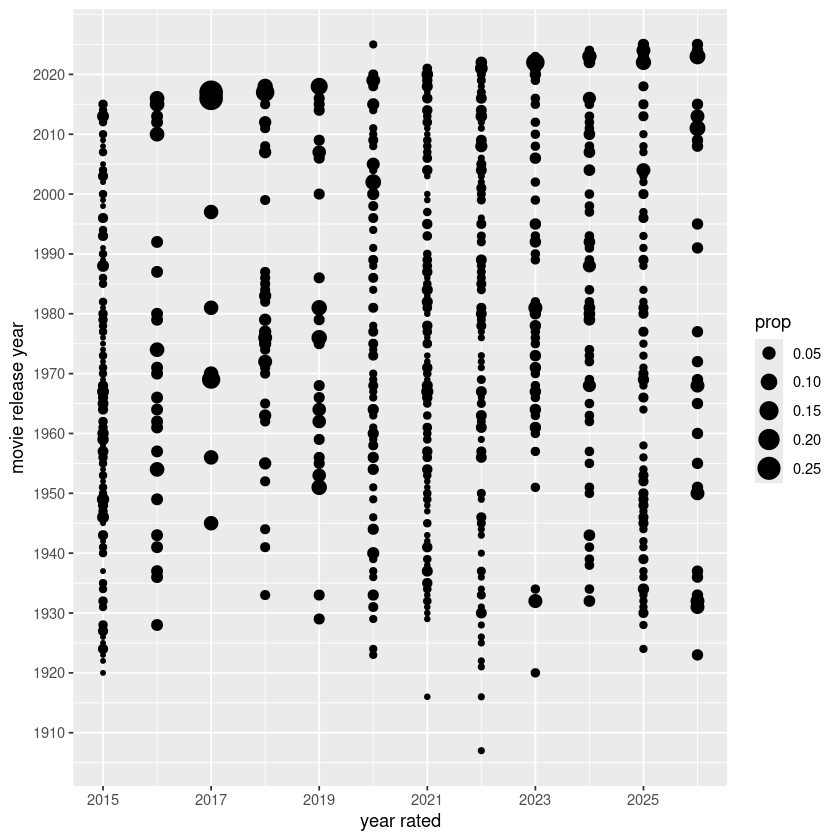
This is again the year of release versus the year of rating, normalized by year.
This one shows number of ratings verses release year. (Click to embiggen.)
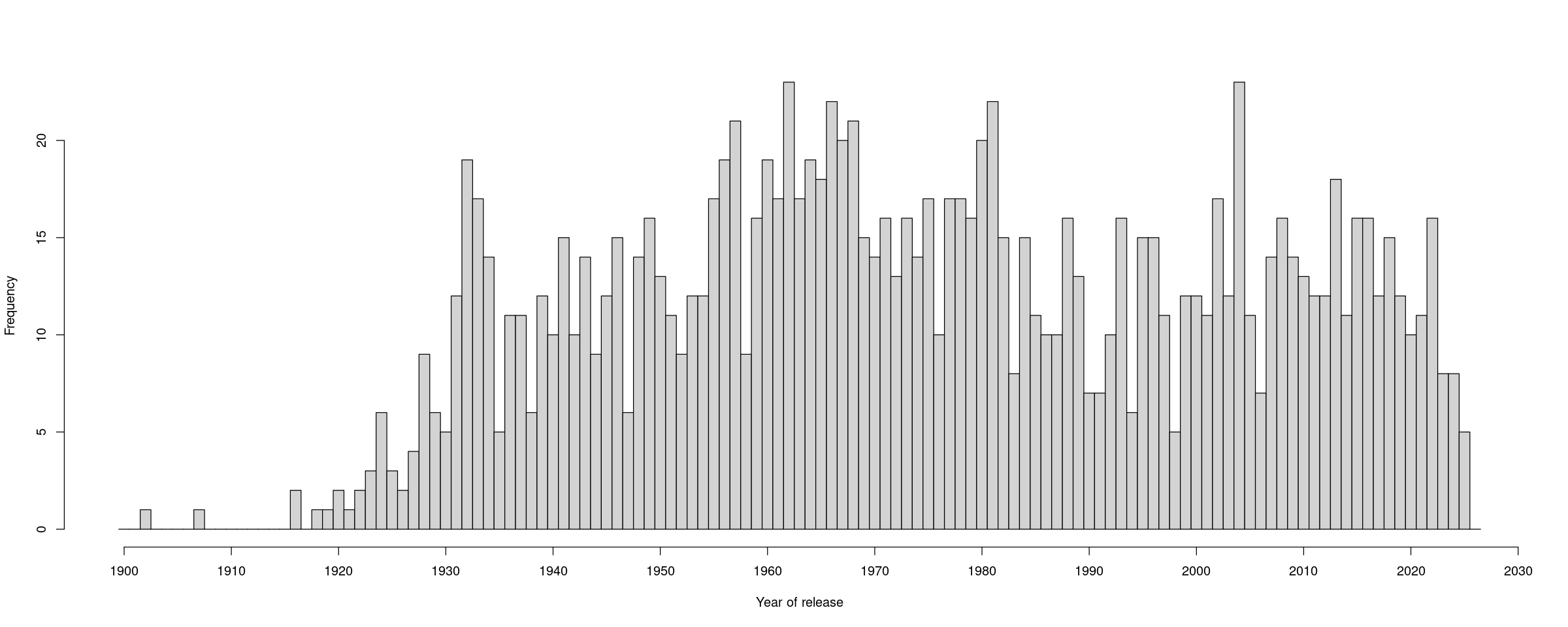
The years with the most ratings are 2004 (23), 1962 (23), 1981 (22), 1966 (22), 1968 (21), 1957 (21), 1980 (20), 1967 (20).
and the years after 1929 with the fewest ratings starts 1930 (5),1935 (5), 1998 (5), 2025 (5), 1938 (6), 1947 (6), 1994 (6), 1990 (7), 1991 (7), 1983 (8).
This one shows number of ratings versus release year again, grouped by decades. (Click to embiggen.)
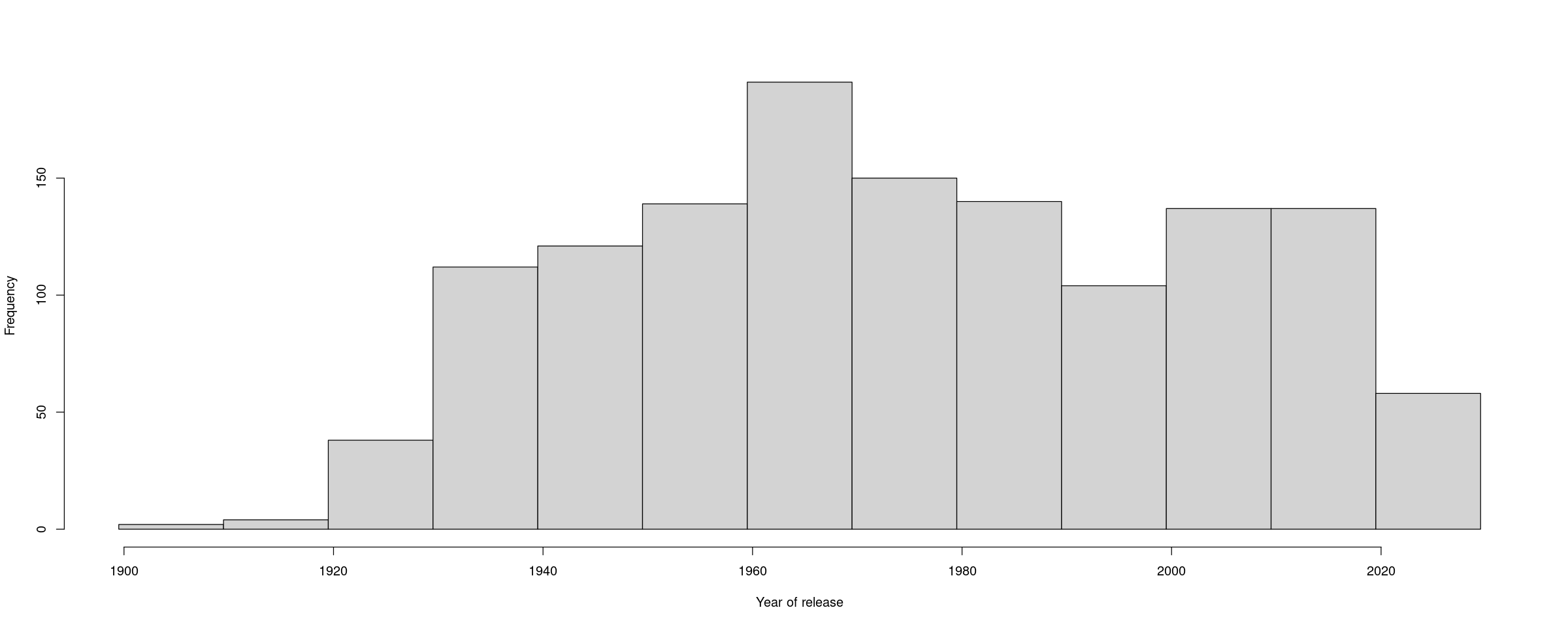
Now, here's the mean rating by year of release:
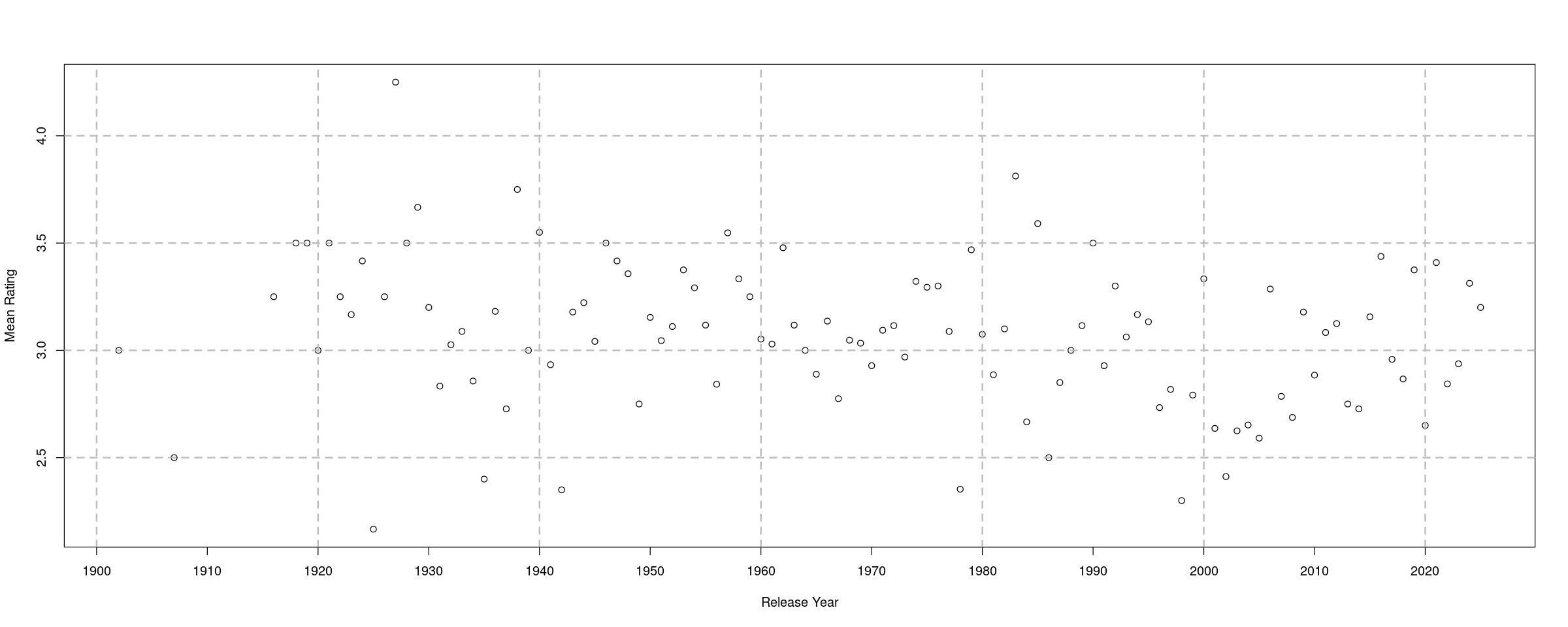
Years with highest mean ratings are 1927 (4.25), 1983 (3.81), 1938 (3.75), 1929 (3.67), 1985 (3.59), 1940 (3.55), 1957(3.55).
Years with the lowest mean ratings are 1925 (2.17), 1998 (2.30), 1942 (2.35), 1978 (2.35), 1935 (2.40), 2002 (2.41), 1907 (2.50), 1986 (2.50), 2005 (2.59), 2003 (2.63) , 2001 (2.64).
So that's a whole lot of silliness.
Let me know if you'd like the R code.
new video: HULL
A new video piece! This one has moving particles that create audio chords based on the convex hulls that one can create from the particles.